


Your dentist says you or your child needs braces, and now someone has mentioned Damon. It sounds like a brand name, and you are not sure whether it is a gimmick or a real difference in the treatment.
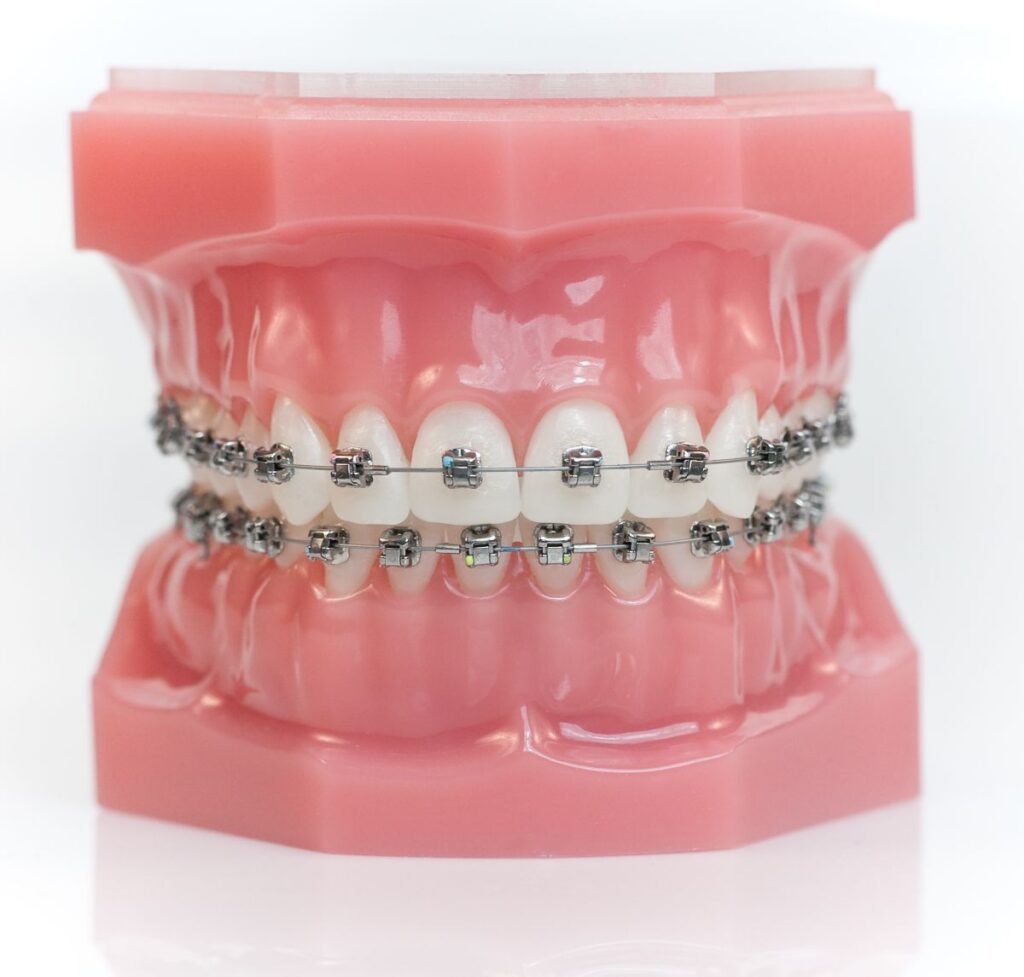
Damon braces are a type of self-ligating braces. Instead of tiny elastic bands to hold the wire, each bracket has a small built-in door that grips the wire on its own. Ormco makes the system, and the design lets the wire slide with less friction. That means an orthodontist can move teeth with lighter, steadier pressure.
Dr. Thomas Jaeger, DDS, has practiced orthodontics in Coeur d’Alene since 1986, and he fits Damon braces at all three of his Idaho offices. Below is what the system does, where it helps, what it leaves out, and what it costs here in Northern Idaho.
Key Takeaways If You Are Comparing Braces
- Damon braces use a self-ligating bracket with a built-in clip, so there are no elastic ties to replace.
- In the US, Damon braces usually run about $3,800 to $8,000, close to the range for other full braces.
- The American Association of Orthodontists suggests a first orthodontic check by age 7, well before all the adult teeth arrive.
- Research has not shown that self-ligating brackets shorten treatment for everyone, so your timeline depends on your bite.
- Book a consult to see whether Damon braces fit your case, or whether another option suits you better.
What Damon Braces Actually Are
Damon braces are self-ligating braces, which means each bracket holds the wire with a sliding door instead of an elastic tie. Ormco, the company behind the system, calls this passive self-ligation. Because no elastic grips the wire, the wire slides freely as your teeth shift. That lets your orthodontist guide movement with gentler, steadier force.
A regular metal brace ties the wire on with a small rubber band, the colorful part many kids pick out at each visit. Damon brackets skip that band. The wire clicks into a little metal door on each bracket, and the door snaps shut to hold it.
That single change is the whole idea, and it affects both how the braces feel and how often you sit in the chair. Damon also comes in a clear bracket version, Damon Clear, for patients who want a lower-profile look. Both types work the same way underneath, so the choice usually comes down to appearance and budget.
How Do Damon Braces Differ From Regular Braces?
The main difference is the tie. Regular braces use elastic or metal ties to hold the wire, while Damon braces use a built-in clip. That one change affects friction, appointment steps, and how easily you clean around the brackets. Both systems straighten teeth well, and neither is right for every mouth.
Here is how the two line up on the things patients ask about most.
| Feature | Regular Braces | Damon Braces |
|---|---|---|
| How the wire is held | Elastic or metal ties | Built-in sliding clip |
| Colored bands | Yes, changed each visit | None |
| Friction on the wire | Higher | Lower |
| Adjustment visits | Ties replaced each time | Wire opened and closed, often quicker |
| Cleaning | More spots to trap food | Fewer parts to catch food |
| Look | Metal with colored bands | Metal or clear, streamlined |
Because the wire is not tied down at each bracket, adjustment visits often move a little faster. The assistant opens and closes each door instead of swapping a dozen tiny bands. Fewer loose bands can also mean fewer surprise repair visits when something pokes between appointments. Over a year or two of treatment, that convenience adds up.
There is one trade-off worth naming, though. Damon brackets have no colored bands, and some kids genuinely miss picking a new color each month. Ask your child how they feel about that before you decide.
Do Damon Braces Really Work Faster?
Sometimes, but not always, and not for everyone. Damon’s lower friction can help teeth move on lighter force, and some cases do finish a little sooner. Still, systematic reviews in the American Journal of Orthodontics and Dentofacial Orthopedics have not found that self-ligating brackets consistently cut treatment time. Your bite and your appointment habits matter more than the bracket brand.
You will see clinics advertise treatment that is 30 percent faster. Be careful with that number, because marketing claims and controlled research do not always line up. The bracket is only one piece of the result, and your anatomy, your growth, and your daily habits all count too.
A typical course of braces runs about 12 to 24 months. Damon may shave a bit off in the right case, but a complex bite still takes the time it takes. Dr. Jaeger gives you a real estimate after he reviews your X-rays, not from a slogan on a billboard.
Are Damon Braces More Comfortable to Wear?
Many patients find Damon braces comfortable, though every mouth is different. The lighter, low-friction forces can feel gentler than tightly tied wires, especially in the first few days after a visit. Fewer parts also means fewer spots for food to stick, so brushing around the brackets is a little easier. You will still feel some soreness when treatment starts.
Soreness for a few days after placement or an adjustment is normal with any braces. A warm salt-water rinse, soft food, and a dab of orthodontic wax over any sharp spot all help you settle in. Most patients are back to normal meals within a few days, once that first tenderness fades.
Damon brackets have no elastic ties, so there are fewer nooks where plaque can hide. That is one reason some patients find them easier to keep clean. Good cleaning also lowers the risk of white spots on the enamel once the braces come off.
What Damon Braces Cost in Northern Idaho
Damon braces in the US usually cost about $3,800 to $8,000, and full braces with an orthodontic specialist often land near $5,000 to $7,000. The price depends on how much your teeth need to move, how long treatment takes, and what your insurance covers. Many offices bill Damon Clear and Damon metal at the same fee.
A few things move the number up or down:
- Case complexity: Mild crowding costs less to treat than a severe bite problem.
- Treatment length: Longer plans mean more visits and more materials.
- Insurance: Many orthodontic plans pay a set amount, often $1,000 to $2,000 toward treatment.
- HSA or FSA: Braces are an eligible expense, so pre-tax dollars lower the real cost.
A specialist fee can look higher than a bargain ad, but it usually bundles records, all your adjustments, and retainers into one number. Jaeger Orthodontics offers flexible payment plans and helps you file your insurance claim. Ask for a written quote at your consult, and read what it includes before you decide. A firm number for your own case only comes after an exam.
Who Are Damon Braces a Good Fit For?
Most people who can get regular braces can get Damon braces. Kids, teens, and adults with crowding, spacing, or bite problems are usually candidates. The American Association of Orthodontists suggests a first check by age 7, since some problems are easier to guide while a child is still growing. For a few young kids, that early visit leads to a short first phase of treatment rather than full braces.
Teens tend to like that there are no bands to snap during sports or a band concert, and busy parents like the shorter adjustment visits. Adults often choose Damon Clear for a lower-key look at work. Adults with older crowns or fillings can still be candidates, though those cases need a careful look first.
Some bite and jaw issues also affect how a child breathes and sleeps at night. Dr. Jaeger looks at airway and breathing as part of the exam, not just straight teeth, which sets his visit apart from a quick cosmetic check. If you are weighing clear aligners instead, that is worth a conversation too. Braces and aligners each handle certain cases better, and Dr. Jaeger will tell you straight which one fits yours.
Getting Fitted for Damon Braces in Coeur d’Alene
Dr. Thomas Jaeger, DDS, has fitted braces in Coeur d’Alene since 1986, and he treats patients with the Damon System at three Idaho locations: Coeur d’Alene, St. Maries, and Kellogg. A consult starts with X-rays and an exam, and then you get a clear treatment plan and a written quote. You leave the office knowing your options, your likely timeline, and your cost.
Those three offices also make care easier to reach for families nearby, including patients from Post Falls, Hayden, and Rathdrum. Our Orthodontist in Coeur d’Alene sits on Lincoln Way, and the team can walk you through both Damon metal and Damon Clear at that first visit. Bring your insurance card so they can check your orthodontic benefit while you are there.
If you live anywhere in Northern Idaho, you do not have to guess whether Damon braces are right for you. Call Jaeger Orthodontics at (208) 667-3341 to book a consultation with Dr. Jaeger and get a straight answer for your smile.