

Choosing to straighten your teeth is an important decision, but selecting the right orthodontic treatment can feel more complicated. Many patients begin their research by comparing Invisalign and traditional braces. Both treatments can create a healthier, more confident smile, but they work differently and may be better suited to different orthodontic needs, lifestyles, and personal preferences.
When patients search for Invisalign vs braces Coeur d’Alene, they are often hoping to find one treatment that is clearly better than the other. The reality is that there is no universal answer. Invisalign may be an excellent choice for one patient, while braces or the Damon System may provide a more predictable solution for another.
At Jaeger Orthodontics in Coeur d’Alene, treatment recommendations are based on more than appearance alone. Your bite, tooth position, jaw development, age, daily habits, treatment goals, and ability to follow instructions all influence which option may work best.
Understanding the differences between clear aligners and braces can help you feel more prepared when discussing your options with an orthodontist.
How Invisalign Works
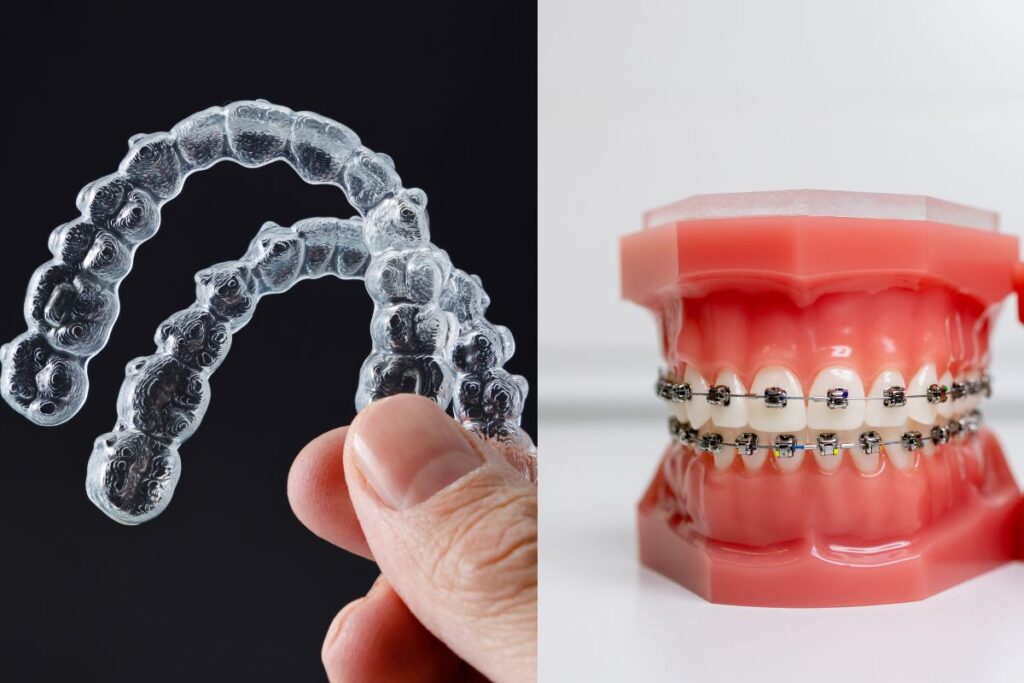
Invisalign uses a customized series of clear, removable aligners to gradually move the teeth. Each aligner is designed to apply controlled pressure to specific teeth at a particular stage of treatment.
Patients typically wear their aligners for approximately 20 to 22 hours each day, removing them only to eat, drink anything other than water, brush, and floss. Depending on the treatment plan, a new set of aligners may be introduced every one to two weeks.
The aligners are created from digital scans of the teeth. Specialized planning software allows the orthodontist to map out tooth movements and monitor progress throughout treatment. Small tooth-colored attachments may be placed on certain teeth to give the aligners additional leverage.
Because Invisalign aligners are transparent, they are less noticeable than traditional metal braces. This is one reason they are popular with adults, college students, professionals, and teenagers who prefer a more discreet orthodontic treatment.
However, Invisalign is not simply a cosmetic product. When planned and supervised by an experienced orthodontist, clear aligners can address many forms of crowding, spacing, overbite, underbite, crossbite, and other alignment concerns.
How Traditional Braces Work
Traditional braces use brackets that are attached to the teeth and connected by an orthodontic wire. The wire applies pressure that gradually guides the teeth into healthier positions.
During treatment, the orthodontist adjusts or replaces the wires as the teeth move. Additional components, such as elastic bands, may be used to improve the relationship between the upper and lower teeth.
Modern braces are smaller and more comfortable than many patients expect. While metal braces remain the most familiar option, some patients may qualify for ceramic braces with tooth-colored or clear brackets that are less noticeable.
One of the greatest advantages of braces is that they remain on the teeth throughout treatment. Patients do not have to remember to put them back in after meals or wear them for a required number of hours each day. This can make braces particularly helpful for children, teenagers, and adults who may struggle with aligner compliance.
Braces also give the orthodontist precise control over complex tooth movements. They can be effective for significant crowding, substantial bite problems, rotated teeth, impacted teeth, and cases that require careful three-dimensional movement.
Invisalign or Braces: Which Is Better?
The question “Invisalign or braces, which is better?” depends on what “better” means for the individual patient.
If your highest priority is having an orthodontic appliance that is difficult to notice, Invisalign may feel like the better choice. If you want a treatment that does not depend on remembering to wear removable aligners, braces may be more practical.
For a relatively straightforward alignment problem, either option might produce an excellent result. For a complicated bite issue, braces may offer greater predictability. In other cases, advanced clear-aligner treatment may still be appropriate when supervised by an orthodontist with experience managing complex movements.
The best treatment is not necessarily the newest, least visible, or least expensive option. It is the one that can safely and predictably address your specific orthodontic condition while fitting realistically into your daily life.
Esthetics and Visibility
The appearance of orthodontic treatment is an important consideration for many patients.
Invisalign aligners are clear and fit closely over the teeth. Although they are not completely invisible, they are generally much less noticeable than metal braces. Tooth-colored attachments may be visible at close range, but most patients still find Invisalign to be a discreet option.
Traditional metal braces are more noticeable. Some patients, particularly younger patients, enjoy selecting different elastic colors and using braces as a form of self-expression. Others may prefer ceramic brackets for a subtler appearance.
Patients who frequently speak in front of groups, attend professional meetings, participate in public-facing work, or have upcoming special events may prefer the lower visibility of clear aligners. Still, treatment quality should remain the primary consideration. A discreet treatment is only beneficial if it can accomplish the necessary tooth and bite corrections.
Comfort During Treatment
Both Invisalign and braces can cause temporary soreness. Orthodontic treatment works by applying pressure to the teeth, so mild discomfort is normal when teeth begin moving.
With Invisalign, patients may feel tightness or pressure when starting a new set of aligners. This sensation usually improves within a few days. The aligners are smooth, although their edges or attachments can occasionally irritate the cheeks or tongue.
Braces may cause soreness after adjustments. Brackets and wires can also rub against the lips or cheeks, especially during the first few weeks. Orthodontic wax can often reduce this irritation while the mouth adjusts.
Neither treatment should cause severe or ongoing pain. Patients should contact their orthodontic office if a wire is poking, a bracket becomes loose, an aligner no longer fits properly, or discomfort seems unusual.
Eating With Invisalign or Braces
Food choices are one of the most noticeable lifestyle differences between Invisalign and braces.
Invisalign aligners are removed before eating, which means patients can generally continue enjoying their usual foods. However, the teeth should be cleaned before the aligners are placed back into the mouth. Putting aligners over food particles or sugary residue can increase the risk of tooth decay, staining, and unpleasant odors.
Patients with braces need to avoid foods that could bend wires or break brackets. Hard candy, popcorn kernels, ice, sticky caramel, and very crunchy foods can damage orthodontic appliances. Apples, carrots, and similar foods may need to be cut into smaller pieces.
For some patients, the ability to remove Invisalign while eating is a major benefit. For others, repeatedly removing, cleaning, and reinserting aligners can become inconvenient. The right option depends partly on your habits and willingness to follow the required routine.
Oral Hygiene and Dental Health
Keeping the teeth and gums clean is essential with any orthodontic treatment.
Invisalign allows patients to remove the aligners and brush and floss normally. The aligners must also be cleaned regularly according to the orthodontist’s instructions. Patients should avoid rinsing them in hot water because heat may distort the material.
Brushing and flossing around braces requires additional care. Food and plaque can collect around brackets and underneath wires. Interdental brushes, floss threaders, water flossers, and other orthodontic cleaning tools may be recommended.
Poor oral hygiene during treatment can lead to cavities, gum inflammation, bad breath, or areas of enamel discoloration. Invisalign may make cleaning easier, but it does not eliminate the need for discipline. Wearing aligners over unbrushed teeth can create its own oral health problems.
Routine dental cleanings and examinations remain important throughout orthodontic treatment, regardless of whether you choose braces or clear aligners.
Treatment Responsibility and Compliance
Patient cooperation affects the success of both treatments, but it is especially important with Invisalign.
Clear aligners only move teeth while they are being worn. Removing them too frequently or forgetting to wear them can slow progress, compromise the planned movements, and extend treatment time.
Patients must also keep track of their aligners. Aligners can be accidentally thrown away in napkins, left at restaurants, chewed by pets, or misplaced while traveling. Keeping them in a protective case when they are not in the mouth can help prevent loss or damage.
Braces are attached to the teeth, so they continue working throughout the day and night. Patients still need to follow instructions about oral hygiene, food restrictions, elastic wear, and appointment attendance. However, they cannot simply forget to wear the main appliance.
For younger patients, the decision may depend heavily on maturity and personal responsibility. Some teenagers are highly successful with Invisalign, while others achieve more dependable results with braces.
What Is the Damon System?
The Damon System is a type of self-ligating braces. Instead of using traditional elastic ties to hold the wire in place, Damon brackets use a built-in sliding mechanism.
The system is designed to allow the orthodontic wire to move through the brackets with reduced friction. Damon braces may use metal or more discreet clear brackets, depending on the patient’s needs and available treatment options.
Like other braces, the Damon System remains attached to the teeth throughout treatment. This gives the orthodontist continuous control and removes the need for patients to remember to wear an appliance.
Patients researching Damon System vs Invisalign should understand that the comparison is not simply between two brands. It is a comparison between a fixed orthodontic appliance and a removable clear-aligner system.
Damon System vs. Invisalign
Both the Damon System and Invisalign can straighten teeth, but they provide different experiences.
Invisalign offers removability and a more discreet appearance. It may be attractive to patients who want fewer food restrictions and the ability to brush and floss without brackets or wires.
The Damon System provides the consistent force and control of braces. It does not depend on 20 to 22 hours of daily patient wear. It may be recommended for patients who need more complex tooth movement or who prefer a treatment that stays in place.
Clear Damon brackets may offer a middle ground for some patients by providing the control of braces with a less noticeable appearance than conventional metal brackets.
The choice between the Damon System and Invisalign should be based on the patient’s orthodontic diagnosis rather than marketing claims. An examination is necessary to determine which system can provide the most predictable result.
Which Option Works Better for Complex Cases?
Braces have traditionally been the preferred treatment for complex orthodontic conditions. They allow the orthodontist to apply carefully directed forces and make detailed adjustments throughout treatment.
Examples of concerns that may be better managed with braces include severely rotated teeth, major bite discrepancies, impacted teeth, large spaces, significant crowding, and cases involving jaw growth or surgical coordination.
Clear-aligner technology has advanced substantially and can now treat many conditions that were once managed only with braces. Attachments, elastics, specialized aligner features, and precise digital planning have expanded Invisalign’s capabilities.
However, being technically possible does not always mean it is the most efficient or predictable option for every patient. In certain cases, braces may still provide better control. Some treatment plans may also involve a combination approach, using braces for one phase and clear aligners for another.
Clear Aligners vs. Braces Cost in Idaho
Patients comparing clear aligners vs braces cost Idaho often expect Invisalign to be significantly more expensive. In reality, costs vary according to the complexity and length of treatment rather than the appliance alone.
A straightforward case requiring limited movement will generally cost less than comprehensive treatment for a complex bite problem. Factors affecting cost may include:
- The severity of crowding, spacing, or bite correction needed
- The estimated length of treatment
- The type of appliance selected
- Whether additional procedures or appliances are required
- The number of appointments and level of monitoring involved
- Insurance benefits and available payment arrangements
Some dental insurance plans include orthodontic benefits that may be applied to either braces or Invisalign. Other plans may have age limits, waiting periods, lifetime orthodontic maximums, or restrictions regarding covered treatment.
The most accurate way to compare costs is to complete an orthodontic evaluation and receive a personalized treatment plan. Jaeger Orthodontics can review expected fees, insurance considerations, and available payment options before treatment begins.
Price is important, but it should not be evaluated separately from the quality of diagnosis, treatment planning, supervision, and long-term results.
How Long Does Invisalign Take Compared With Braces?
Treatment time varies widely for both Invisalign and braces.
Some limited clear-aligner cases may be completed in several months. Comprehensive orthodontic treatment may take 12 to 24 months or longer, depending on the condition being treated.
Braces are not automatically slower than Invisalign, and Invisalign is not automatically faster than braces. Treatment speed depends on biological response, complexity, appointment attendance, appliance care, elastic wear, and aligner compliance.
An orthodontist can provide an estimated timeline after evaluating the teeth, bite, jaw relationship, and treatment goals. Even then, the timeline is an estimate because teeth do not move at exactly the same rate for every patient.
Trying to move teeth too quickly can affect the health and stability of the result. Safe, controlled treatment should take priority over promises of unusually fast results.
Invisalign or Braces for Teenagers
Both options may work well for teenagers, but the decision should account for maturity, school activities, sports, music, hygiene habits, and treatment complexity.
Invisalign may appeal to teenagers who are concerned about photographs, school events, or social confidence. Aligners can be removed for eating and oral hygiene. They may also be convenient for certain wind instrument players and athletes, although appropriate mouth protection is still important.
Braces may be preferable for teenagers who are likely to lose aligners or forget to wear them. Because braces remain attached, treatment does not depend as heavily on daily wear decisions.
Parents should avoid choosing an appliance based only on what seems easiest at the beginning. The teenager’s ability and willingness to follow the treatment plan is one of the strongest predictors of a successful experience.
Invisalign or Braces for Adults
Adults frequently choose orthodontic treatment to improve their smile, bite, oral health, or long-term dental function.
Invisalign is especially popular among adults because it is discreet and can be removed for meals, presentations, photographs, and important events. However, adults must be realistic about wearing the aligners consistently during workdays, travel, and social activities.
Braces remain an excellent adult treatment option. Clear or ceramic brackets may make them less noticeable, while fixed appliances can provide efficient control for more complex movements.
Adult patients may also have existing dental work, gum concerns, missing teeth, or plans for implants and restorations. Orthodontic treatment may need to be coordinated with a general dentist, periodontist, oral surgeon, or restorative dentist.
A comprehensive treatment plan can help ensure that tooth movement supports both the appearance and long-term function of the smile.
Will You Need to Wear a Retainer?
Yes. Retainers are necessary after both Invisalign and braces.
Teeth have a natural tendency to shift after orthodontic treatment. Retainers help maintain their new positions while the surrounding bone and tissues stabilize.
Your orthodontist will recommend the appropriate type of retainer and provide instructions about how often it should be worn. Some patients begin with full-time retainer wear and later transition to nighttime wear. Long-term nighttime use is often recommended to help protect the result.
Choosing Invisalign does not eliminate the need for a retainer. The final Invisalign aligner is also not intended to serve as a permanent retainer unless specifically directed by the orthodontist.
Consistent retainer wear is one of the most important steps in preserving your investment in orthodontic treatment.
Questions to Ask During Your Orthodontic Consultation
An orthodontic consultation is an opportunity to understand not only which treatments are available, but why one may be recommended over another.
Useful questions include:
- Can both Invisalign and braces treat my condition predictably?
- Is my bite more complicated than it appears?
- Would the Damon System offer an advantage in my case?
- What level of patient cooperation will be required?
- How long is each option expected to take?
- What is included in the treatment fee?
- Will I need elastics, attachments, or additional appliances?
- What type of retainer will I need after treatment?
A thoughtful orthodontist should be able to explain the benefits, limitations, and responsibilities associated with each option. Treatment recommendations should be personalized rather than based on a one-size-fits-all approach.
Choosing the Right Orthodontic Treatment in Coeur d’Alene
When considering Invisalign vs braces in Coeur d’Alene, start by identifying what matters most to you. You may value discretion, removability, easier brushing, fewer food restrictions, or an appliance that does not depend on daily compliance.
Next, consider what your orthodontic condition requires. Your preferred appliance may not always be the one that provides the best control for your bite or tooth movement. An experienced orthodontist can explain whether Invisalign, traditional braces, or the Damon System is likely to produce the safest and most predictable result.
The quality of the treatment plan matters more than the appliance name. Invisalign and braces are tools. Their success depends on accurate diagnosis, skilled supervision, patient cooperation, and proper retention after treatment.
Find Out Whether Invisalign or Braces Is Right for You
Online comparisons can help you understand the basics, but they cannot show how your teeth and bite will respond to treatment. Two patients with similar-looking smiles may need very different orthodontic plans.
At Jaeger Orthodontics in Coeur d’Alene, patients can receive a personalized evaluation and discuss the advantages and limitations of Invisalign, braces, and the Damon System. The goal is not simply to select the most popular appliance. It is to choose a treatment that supports a healthy bite, an attractive smile, and a result designed to last.
Whether you are exploring orthodontic care for yourself or your child, a professional consultation is the best place to begin. Schedule a visit with Jaeger Orthodontics to learn which option may be right for your smile and lifestyle.